SKILL TREE DEVELOPMENT
Mad chilli – Revenge of the roots
CASE STUDY INTRODUCTION
Why you doing skill trees?
GAME INTRODUCTION
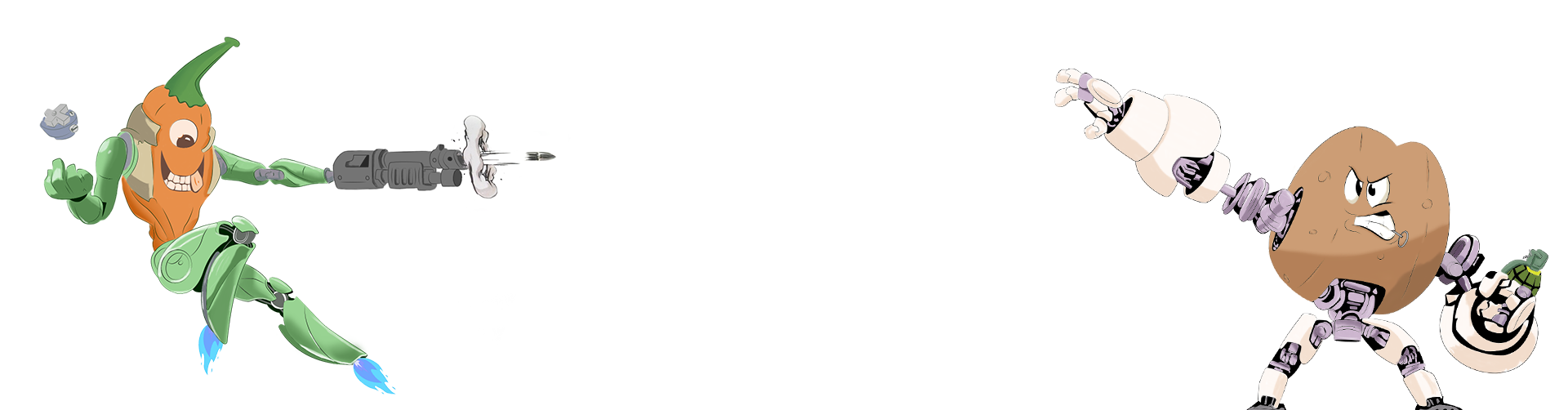
Mad chilli. Revenge of the roots is an online team-based multiplayer first-person shooter. The players are divided into 2 teams Chillis or Roots, each containing 6 players. The gameplay consists of time-based rounds, with the team finishing with the highest points declared the winners. In Mad chilli. Revenge of the roots, players are ranked by their level. The highest level is 30 with players levelling up by gaining experience points through participating in battles. The players will receive a skill point each level they rank up, which they can spend on a character progression system (Character skill tree).
What are progression systems?
A progression system is when a player is given the sense that their character is improving and progressing throughout the gameplay.
Gaining experience points (levelling up) using a visual representation such as skill trees to upgrade abilities. Skill trees are present in most games, and often have a few distinct branches for character progression.
With skill trees, you accrue experience points by playing the game, and when you hit an arbitrary threshold you get a skill point. This skill point can be spent to unlock a new ability.
This puts the player in control of how they advance. As you earn new abilities, your levelling up progression happens incrementally throughout gameplay. Skill trees also add meta-level decision making into a game, creating a different experience for different play styles.
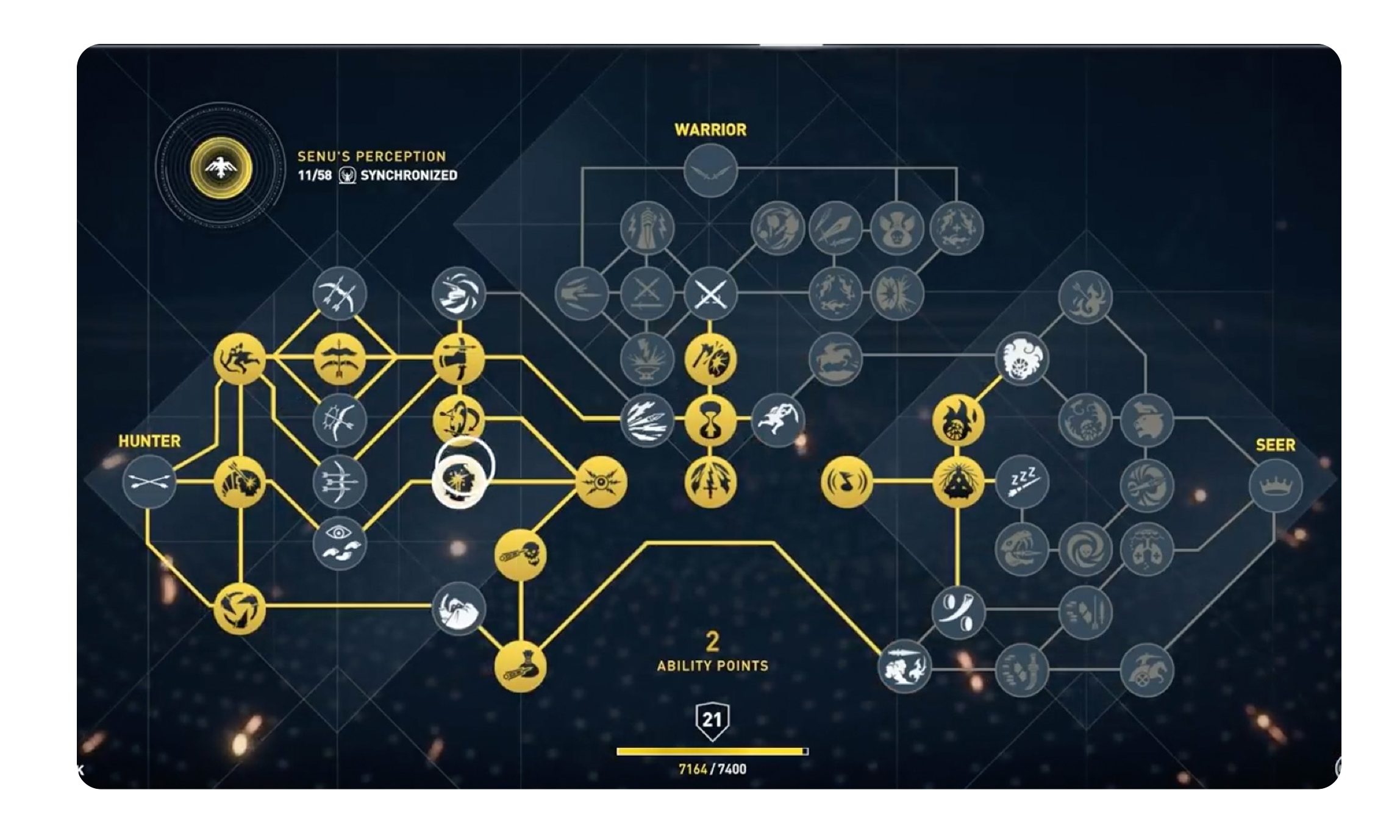
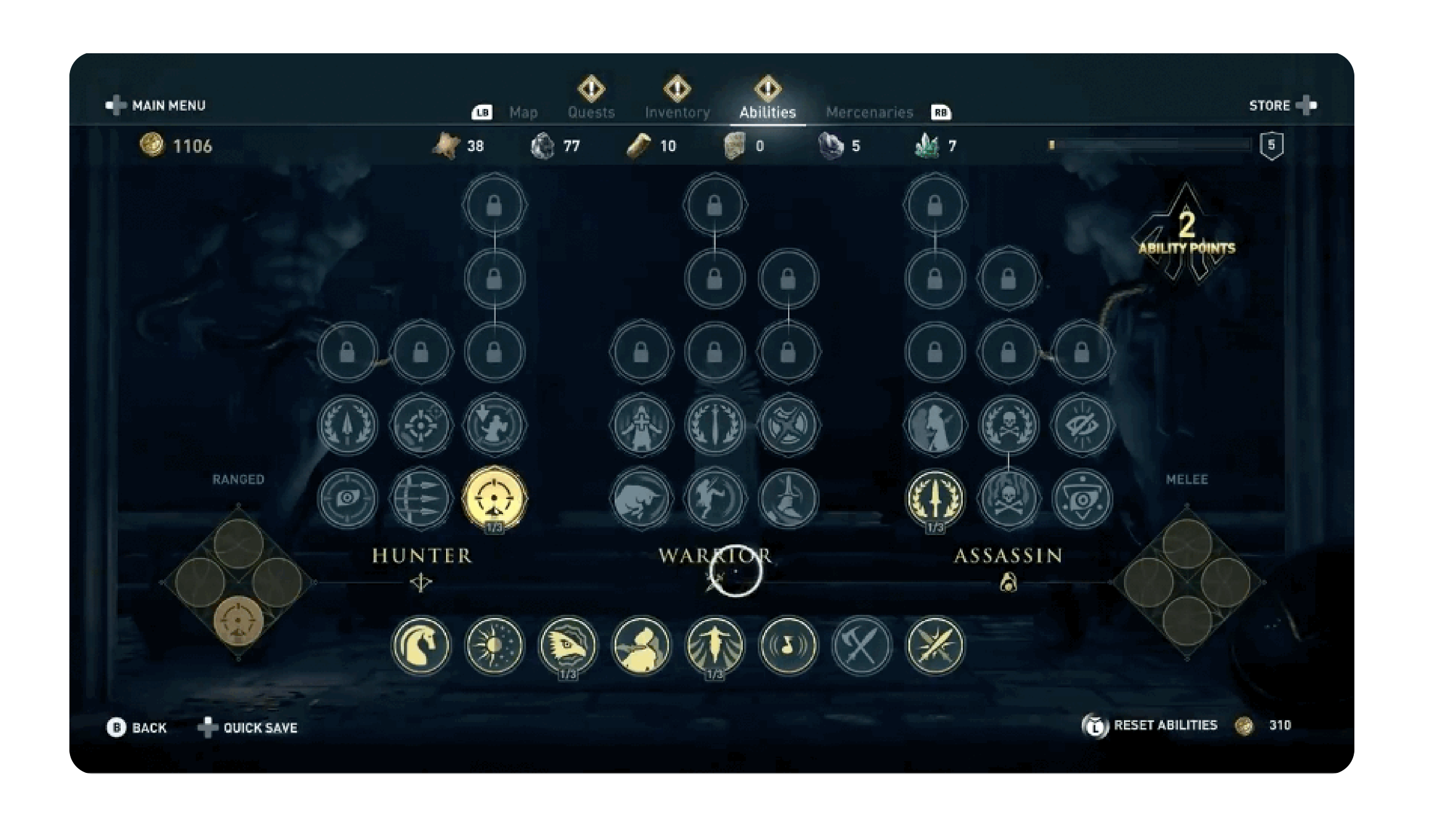
Some games allow the player to unlock most or all upgrades during the duration of the game. This is a missed opportunity to make the players think hard about their choices. They're only thinking about what order they unlock the skills – when they could be thinking about which future upgrades they're able to get. And how this affects the players game style.
Assassin's creed origins is a great example, the player can not afford all the skills by the end of the game. The player has to make a choice in which skill branches they take. If the player focuses on the Hunter and seer skill branches, this will improve the characters abilities in stealth. The character (Bayek) will feel personal to the player and fits the way they play the game. Which as a result creates interesting repercussions for choices. Neglecting the warrior branch the characters one-on-one combat skill is low. This enhances the unique personality of Bayek for this player, having low combat skills the player will need to run away from direct encounters and find new ways to approach situations.
THE OBJECTIVE
To create a character progression system that enables players the power to build a character with unique abilities that match their playing style.
What are the characters in Mad chilli – Revenge of the roots?
In Mad chilli. Revenge of the roots the playable characters are split into two teams Chillis or Roots. Each team has three character classes and the class have four skill branches.
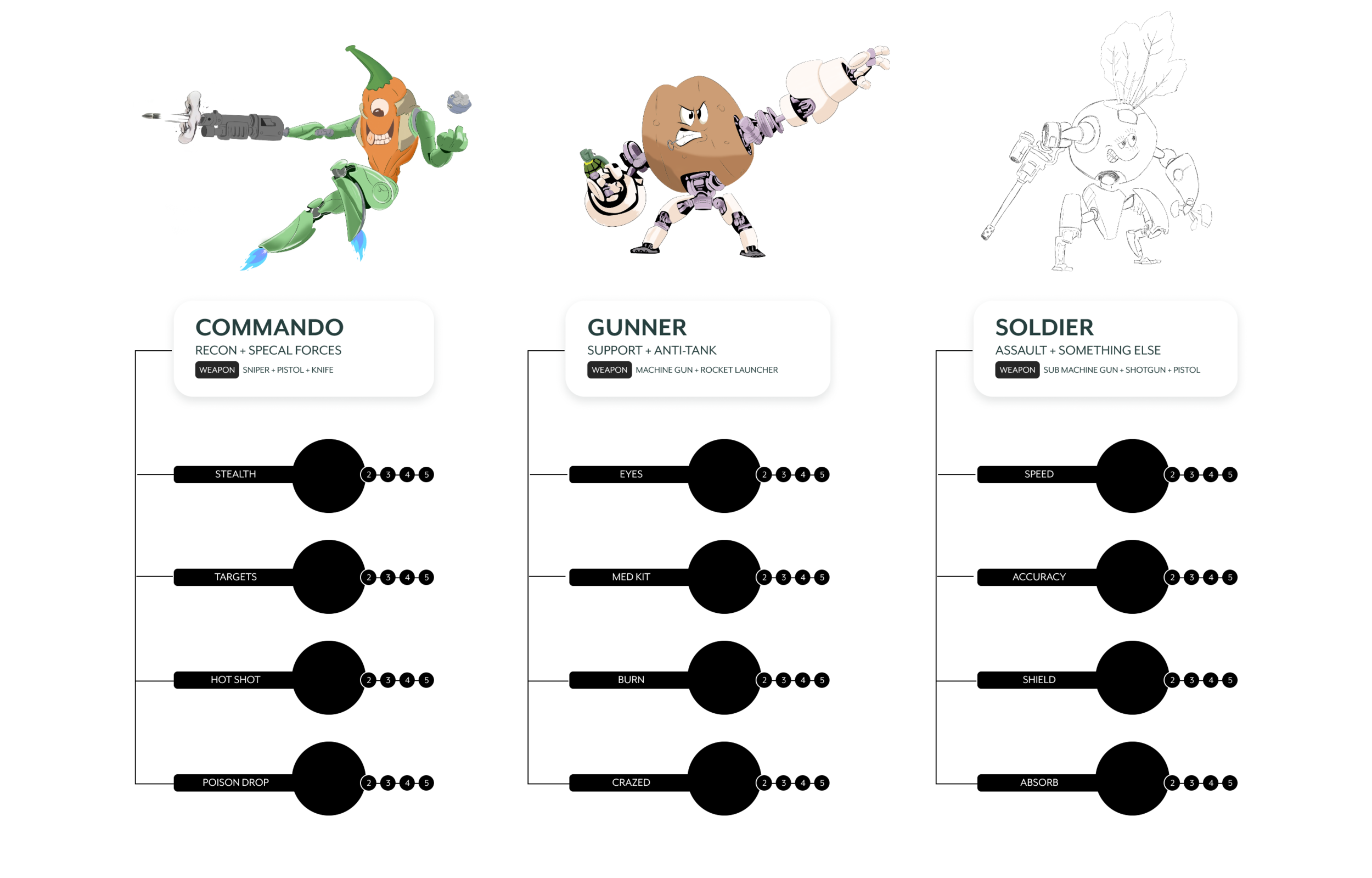
The player can then build abilities from the skill tree to adapt a unique playing style.
USER RESEARCH
THE PLAN
ANALYSIS
To start the research, I studied similar games that used character progression systems. The scope of the study included the user interface, user flows and information architecture.
In my research I found that some games with a skill tree allow the player to unlock most or all upgrades during the duration of the game. This is a missed opportunity to make the players think hard about their choices. They're only thinking about what order they unlock the skills – when they could be thinking about which future upgrades they're able to get. And how this affects the players game style.
From there I was able to discover potential player pain points and derive a few research objectives detailed below:
What is the first thing that the players identify when choosing characters?
Will the players browse all paths of a character skill tree before making the final choice?
How do they feel about the selections process when choosing abilities for their character?
How do they feel about respeccing (i.e resetting) the character abilities?
SURVEY
I created a participant recruitment survey to identify the ideal candidate to approach for the one-on-one interview to explore the research objectives stated above and then guide a prototype walkthrough.
Out of the 20 surveys, I identified 5 ideal participants whom I was able to onboard for the research study.
PROTOTYPE DEVELPMENT
USER FLOW
I mapped out the initially designed user flows to help identify and define potential problems and pain points.
I focused on two actions points to understand the navigation flow:
#1 – How does the player upgrade a new ability?
Lorem ipsum dolor sit amet, consectetuer adipiscing elit, sed diam nonummy nibh euismod tincidunt ut laoreet dolore magna aliquam erat volutpat.
#2 – How does Player respec the chosen characters?
Lorem ipsum dolor sit amet, consectetuer adipiscing elit, sed diam nonummy nibh euismod tincidunt ut laoreet dolore magna aliquam erat volutpat.
BRAINSTORM & SKETCH
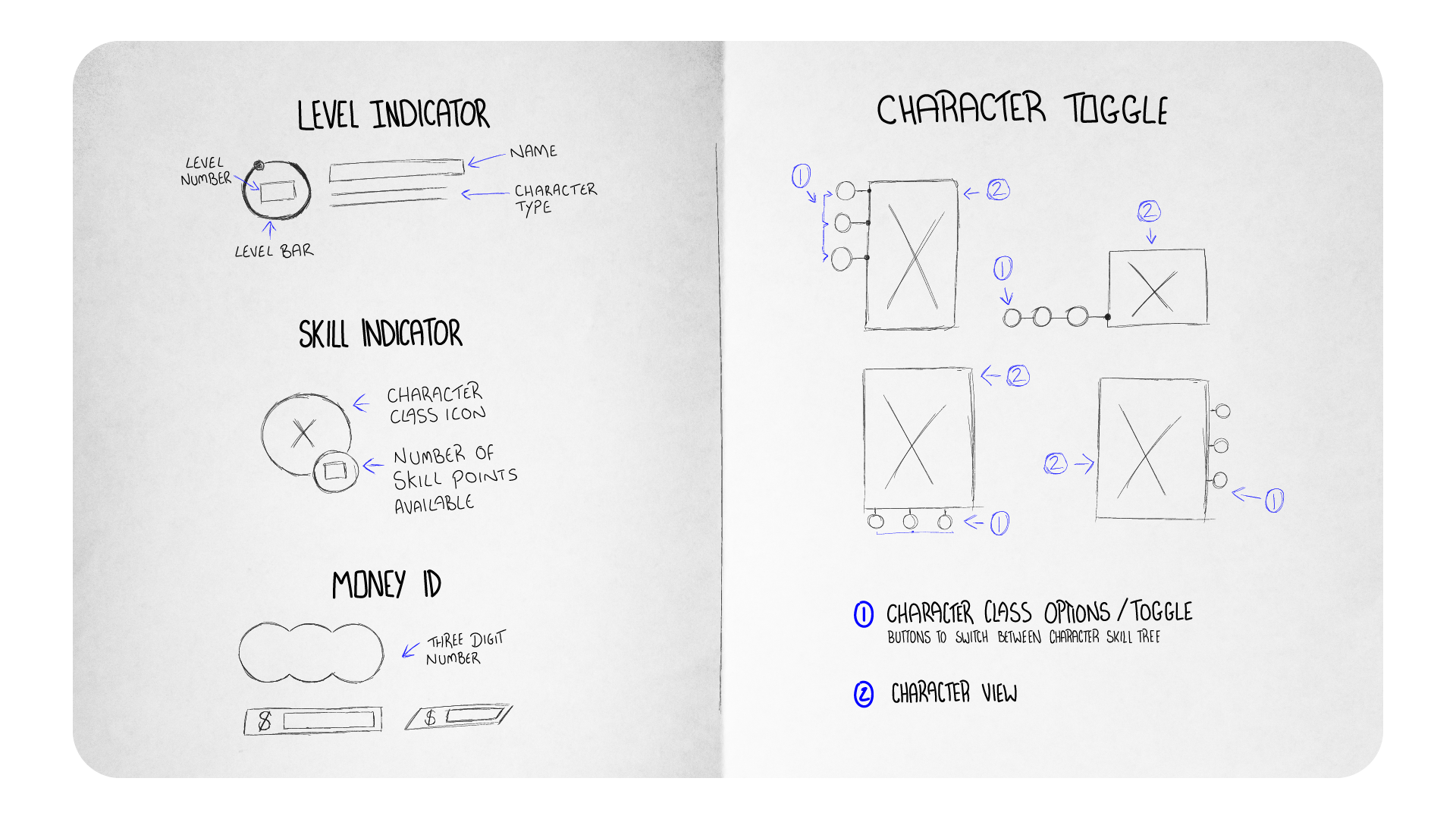
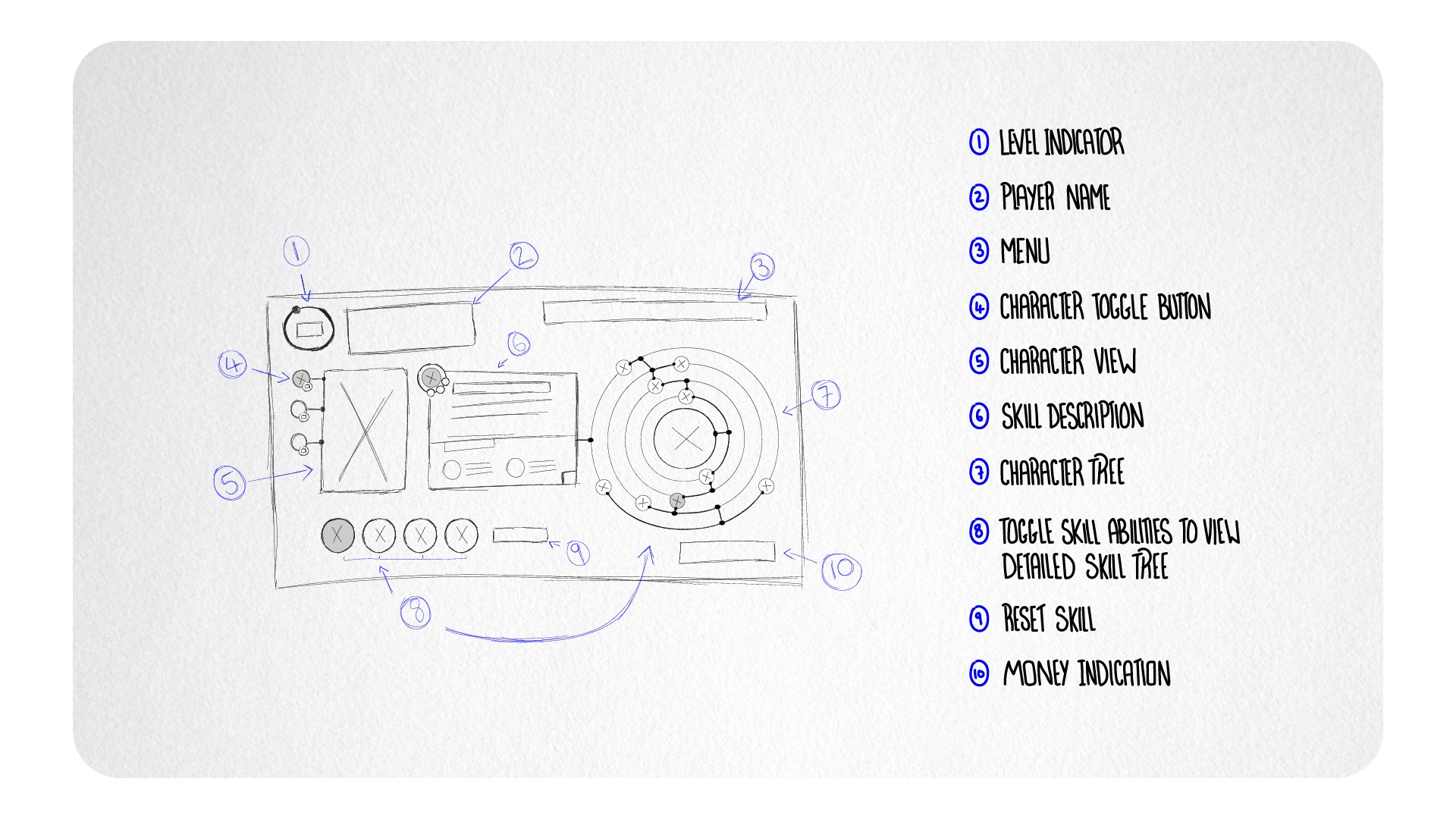
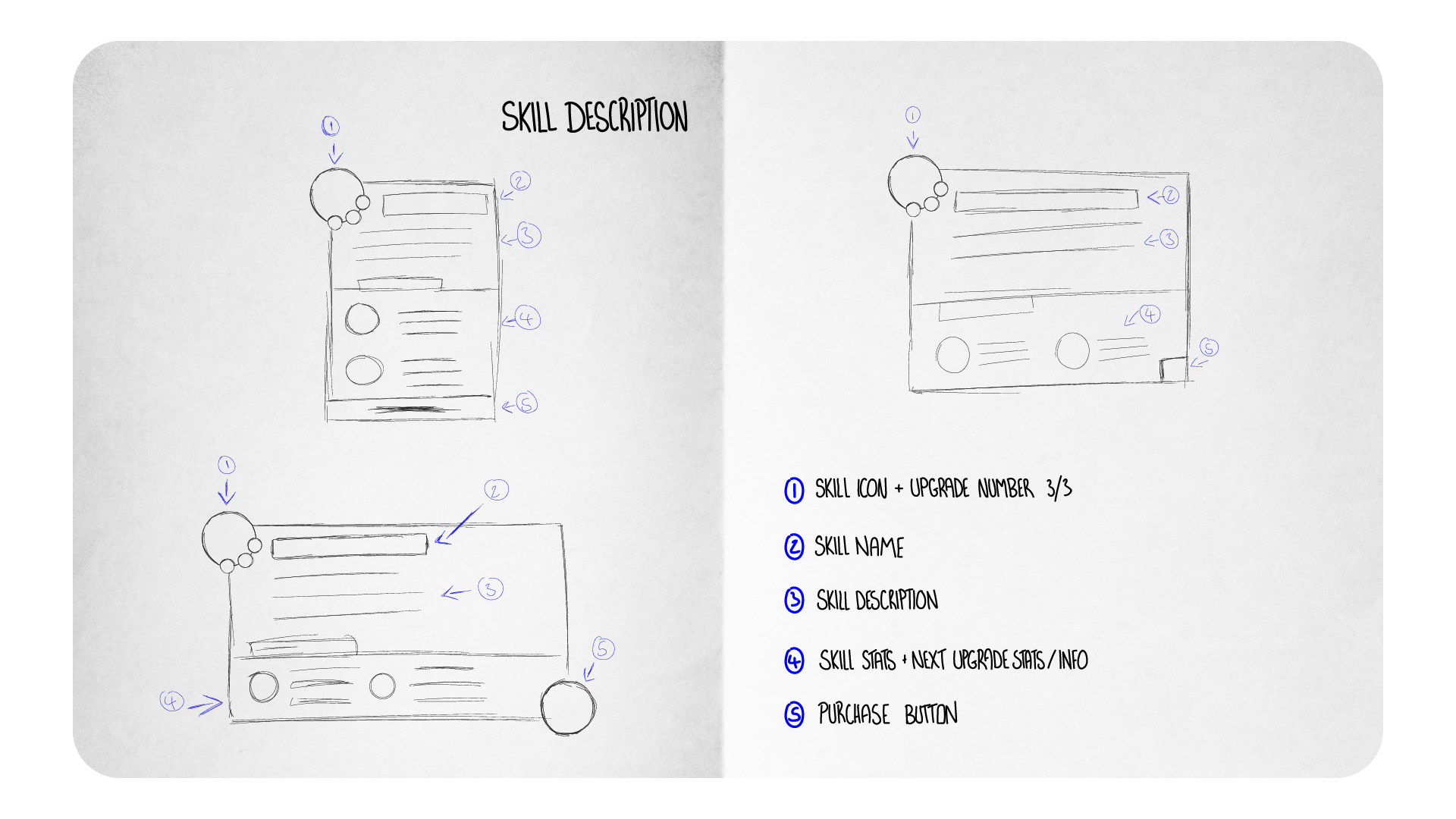
Based on the above user flow and analysis, I sketched the following layouts, features and ideas.
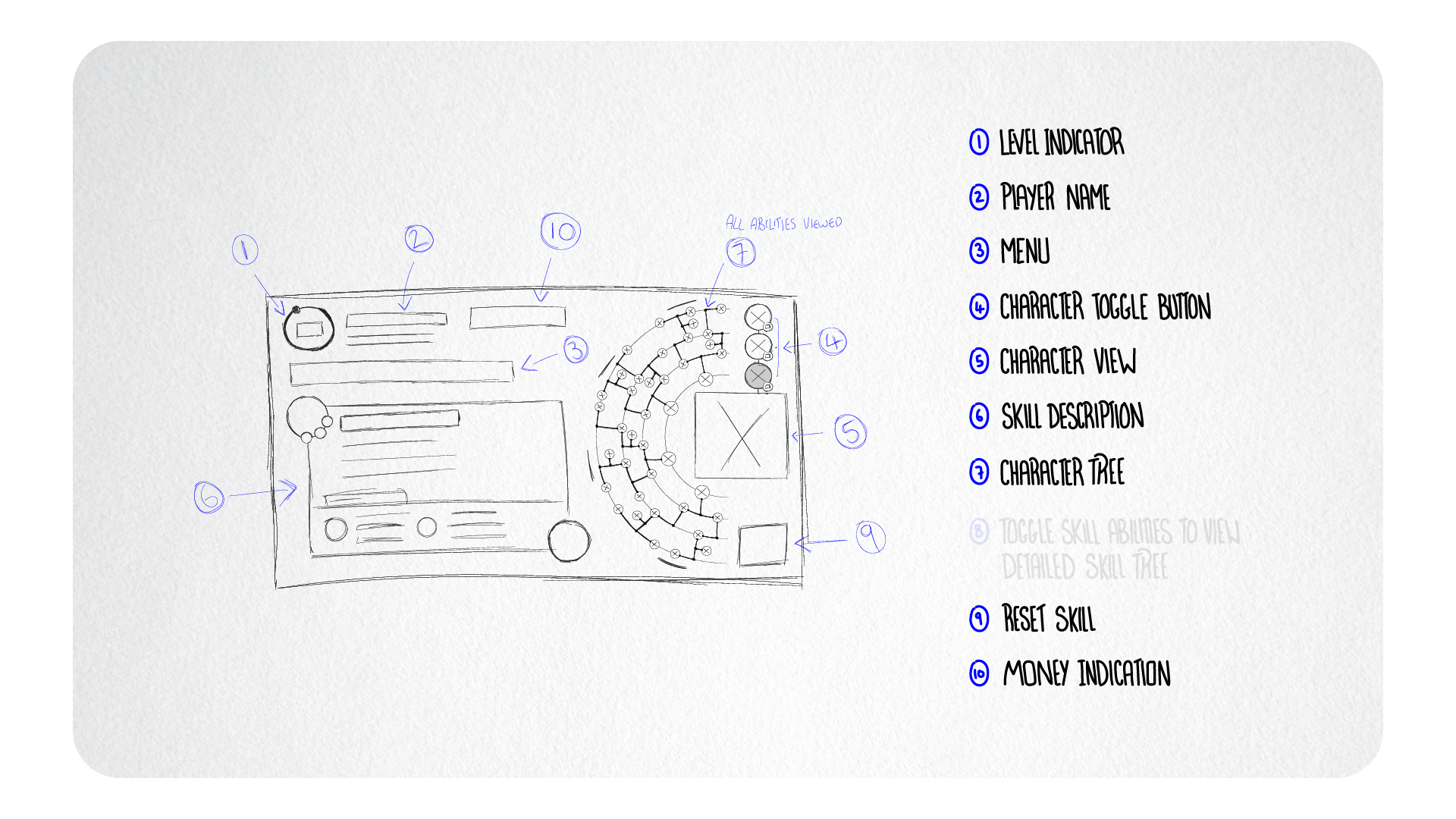
WIREFRAMES AND PROTOTYPE WALKTHROUGH
I created low-fidelity wireframes, proposing two design layouts based on initial user research and user needs. The wireframes were converted to prototypes in Figma. This helped better assess the functionalities, layout and components along with the participants during the one-on-one interview.
#1 – How does the player upgrade a new ability?
#2 – How does Player respec the chosen characters?
Insight analysis:
AFFINITY MAPPING
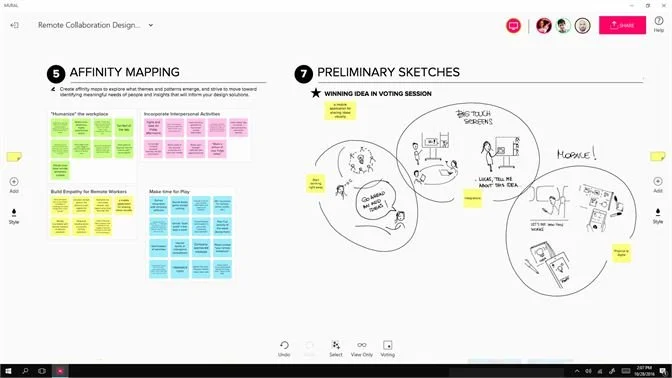
After organising the user feedback into categories, I started identifying the potential pain points.
Choice paralysis
“quote”
The participant was not able to make a decisive choice on which ability to upgrade. They had either too many choices or were unable to identify which ability was better for their needs.
Confusing Respec function
“quote”
The respec feature was confusing and wasn't clear on how much this will cost the participant.
Unclear Information architecture
“quote”
The understanding of what each ability has on the character stats is not clear for the participants to make
Prototype
Based on the initial low fidelity wireframe and iteration process, I further developed the structure to a higher fidelity prototype showcasing what the product would look like and function.