Redesigning the bonus engine to improve promotion configuration and operational confidence
Transforming a complex internal promotion system into a structured configuration experience that improves clarity, reduces operational risk, and enables teams to launch campaigns with confidence.
RANK INTERACTIVE (WEB APPLICATION) | SENIOR PRODUCT DESIGNER (UX/UI)
Introduction
The Rank Group is a FTSE-listed international gambling and entertainment company operating physical venues and digital platforms across the UK and Europe.
With over 7,700 employees and 3.1 million active customers, its internal systems support a business generating nearly £800M in annual net gaming revenue.
Context
Promotional campaigns are a key driver of player acquisition and engagement.
These promotions were configured by employees through an internal platform known as the bonus engine.


Problem statement
Promotion setup required navigating multiple layers of rules, conditions and screens making it difficult to understand how configurations would behave once launched. As a result, teams relied heavily on manual QA to verify setups with many issues only identified after deployment. This led to frequent rework, inconsistent promotion behaviour, and reduced efficiency in launching campaigns.
Configuring promotions within the bonus engine was complex, fragmented, and difficult to validate resulting in high levels of error, slow campaign setup and low confidence across teams.
How might we enable teams to configure promotions in a way that is clear, predictable, and validated in real-time?
Signals and evidence
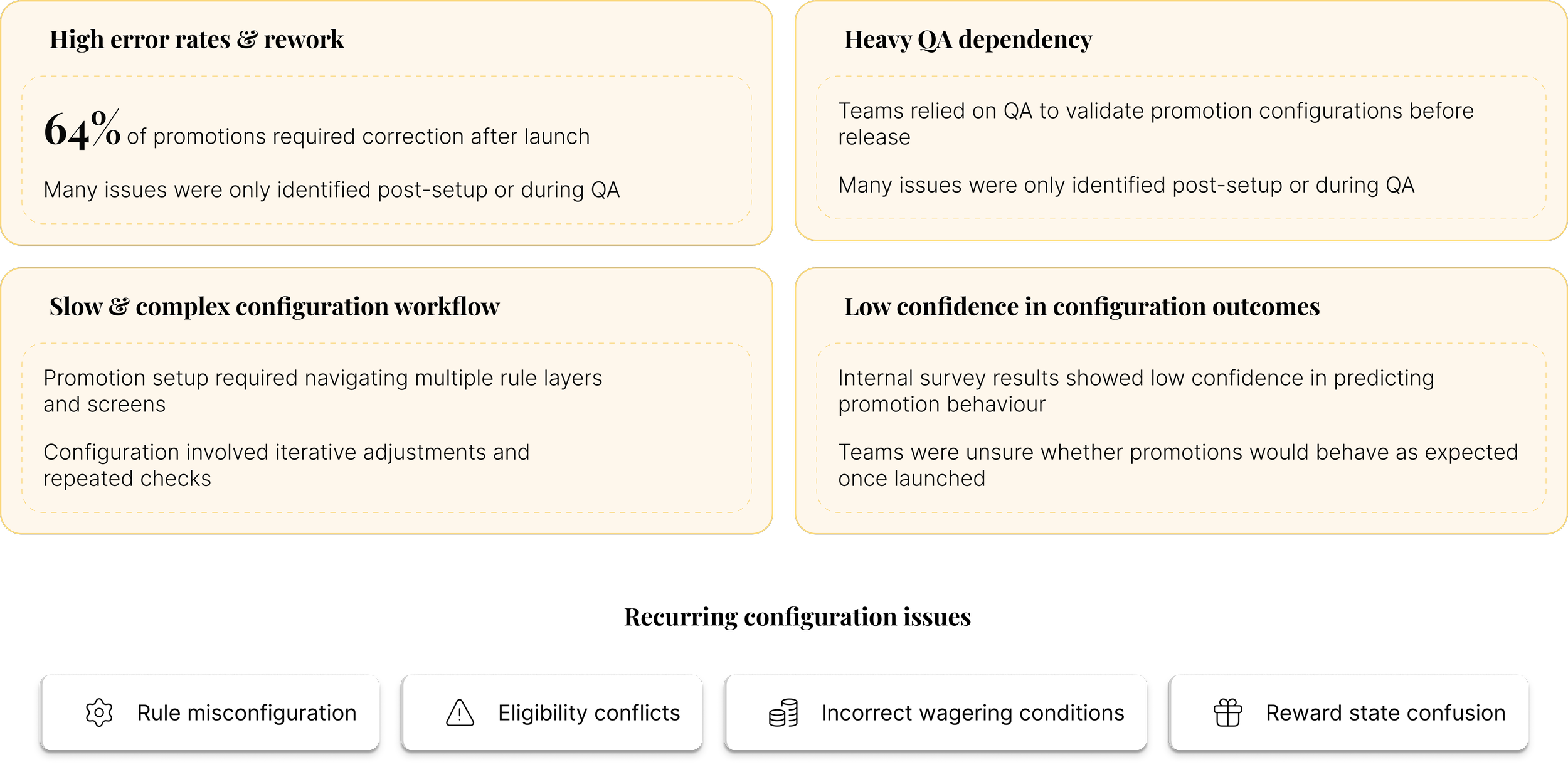
This challenge was grounded in a consistent set of operational signals observed across promotion configuration, validation and campaign management workflows.
Underlying Pattern
These signals suggested that the core issue was not just usability but a lack of system clarity and predictability in how promotions were configured and validated. While these signals highlighted the scale of the problem, they did not explain its root causes.
A discovery phase was conducted to break down how promotions were configured, validated and managed across teams.
Discovery
The Bonus Engine was used by multiple internal teams to configure and manage promotional campaigns across the digital platform. To understand the problem, discovery focused on three areas: how teams configured promotions, how the system interpreted configuration logic and how promotions were managed across their lifecycle.
This involved working across a globally distributed organisation, leading a structured discovery phase that combined user interviews, workflow analysis and cross-functional workshops with teams in London, Gibraltar, Mauritius and Cape Town.
Activities
The discovery phase combined qualitative research, workflow analysis, and system-level investigation to understand both user behaviour and underlying system logic.
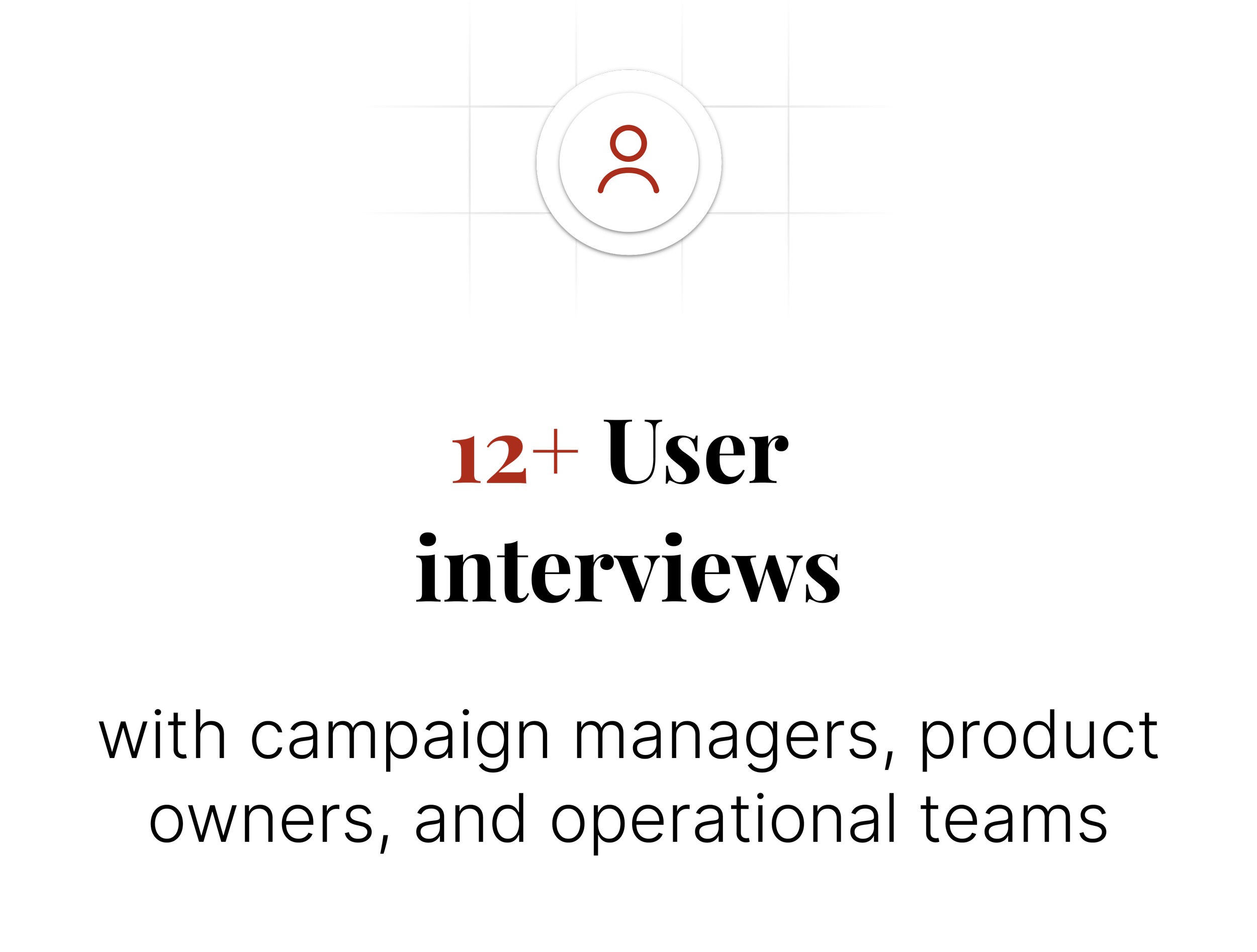
These activities focused on where errors occurred, how promotion rules were interpreted, when validation took place, and how teams interacted across the lifecycle.
Outcome
The findings showed the issue was not just about usability but how the system was structured and understood across teams. A gap between expected behaviour and system logic led to inconsistent outcomes and low confidence.
In order to solve these gaps, we had to gain a deeper understanding of the incentive ecosystem, configuration architecture and operational lifecycle of this workflow.
How are promotions setup in the core?
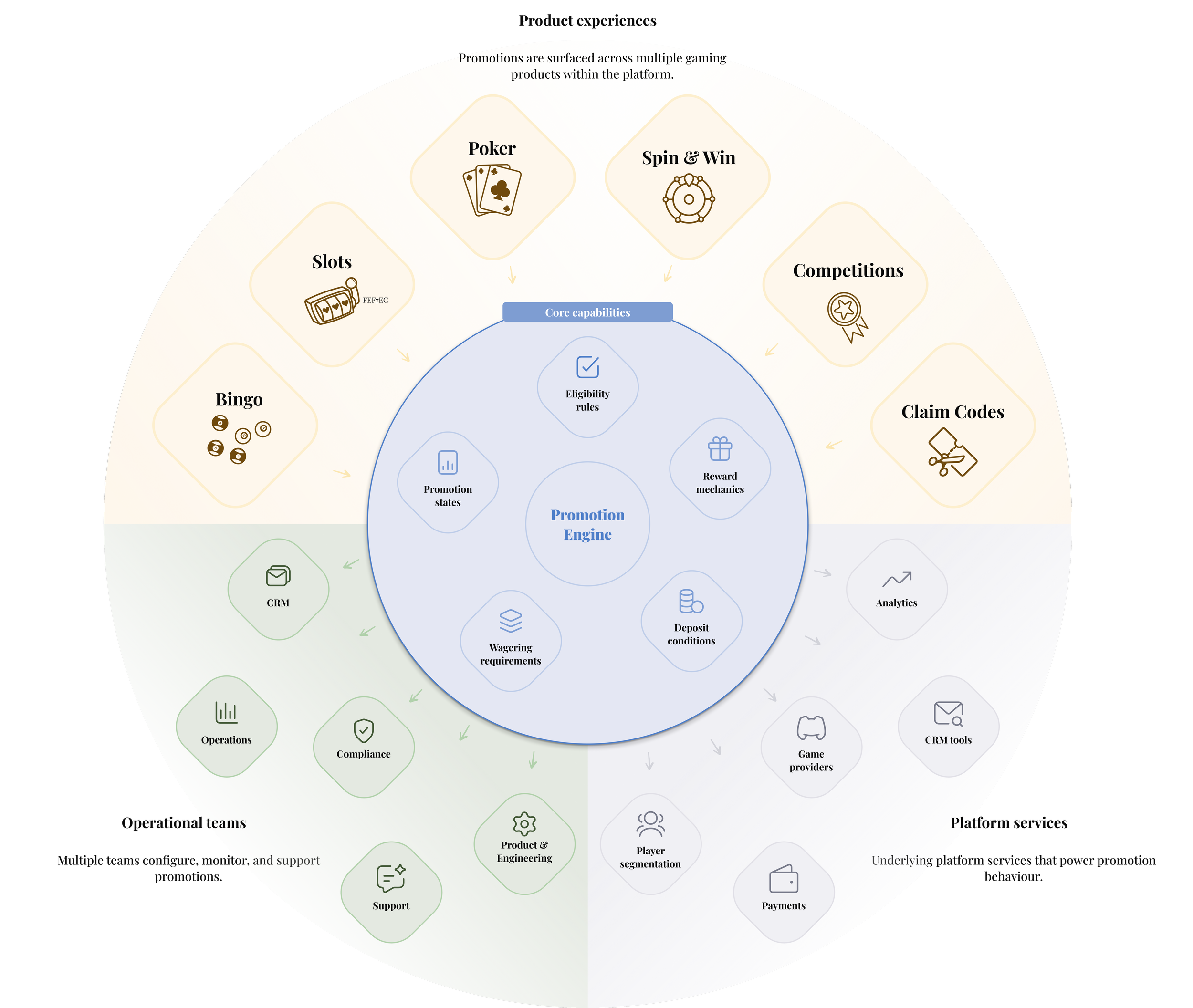
I conducted cross functional workshops to understand the incentive ecosystem, building a shared view of how promotions operate across the player journey from entry points to reward outcomes. This workshop created a shared mental model across teams, reduced ambiguity in promotion behaviour and established a foundation for structuring system logic.
Incentive ecosystem
Configuration architecture
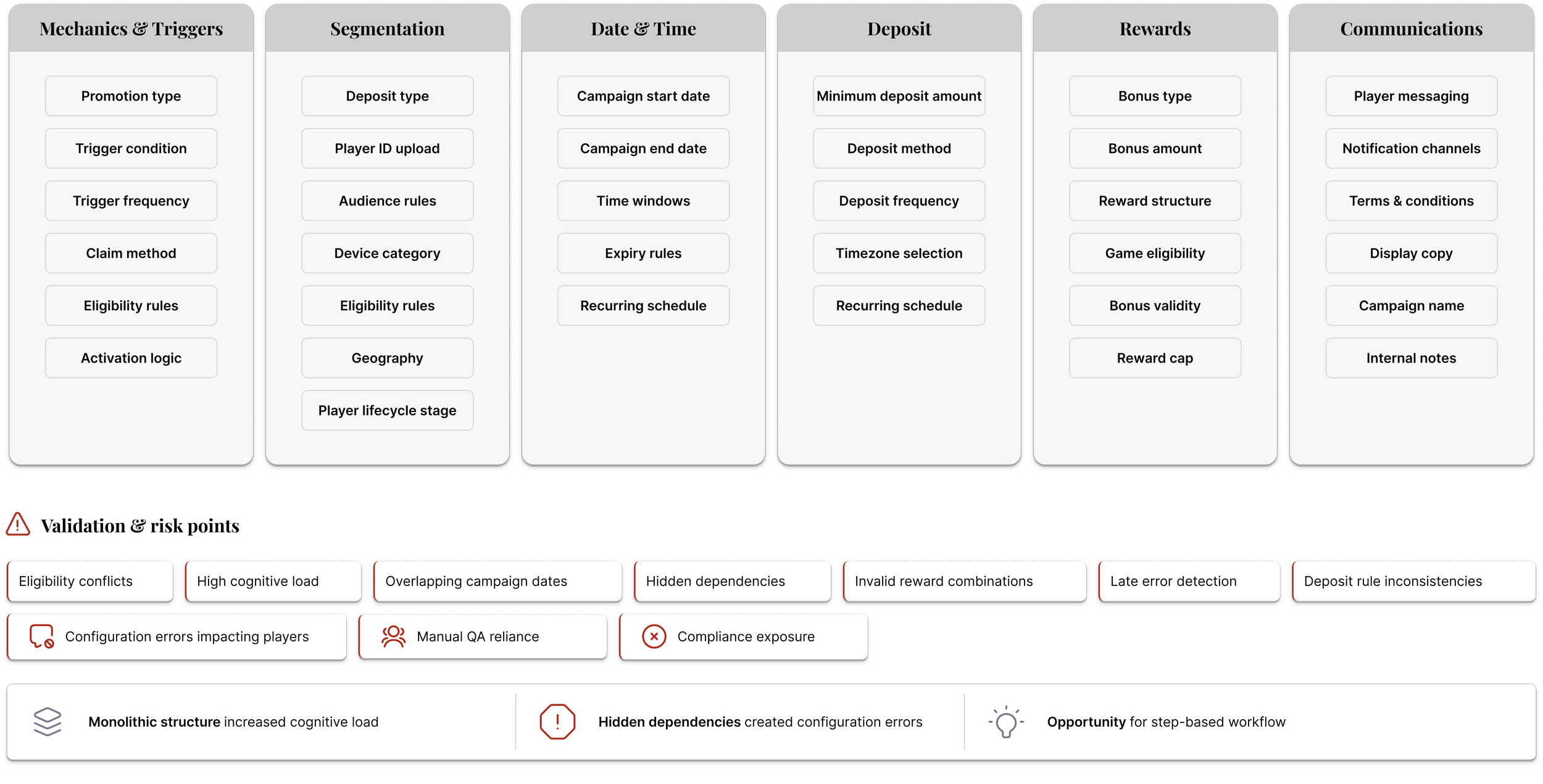
The existing configuration model was broken down to understand how rules, conditions, triggers, and rewards were structured. This activity helped us to create a clearer configuration network that clarified relationships between elements and improved predictability in how promotions are built.
Form deconstruction & rules architecture
End to end workflow
Based on user interviews and workshops, the end-to-end lifecycle of a promotion was mapped from initial setup through validation, launch, monitoring and closure. This helped us identify the key stages where errors occurred, points of handoff between teams and gaps in validation and ownership.
Operational journey & dashboard needs
Design strategy
The discovery phase showed that the core issue was not usability alone, but a lack of clarity in how promotion logic was structured, connected and interpreted across teams.
Rather than optimising individual interactions I focussed the approach on restructuring the system around how promotions are defined, validated and managed in practice.
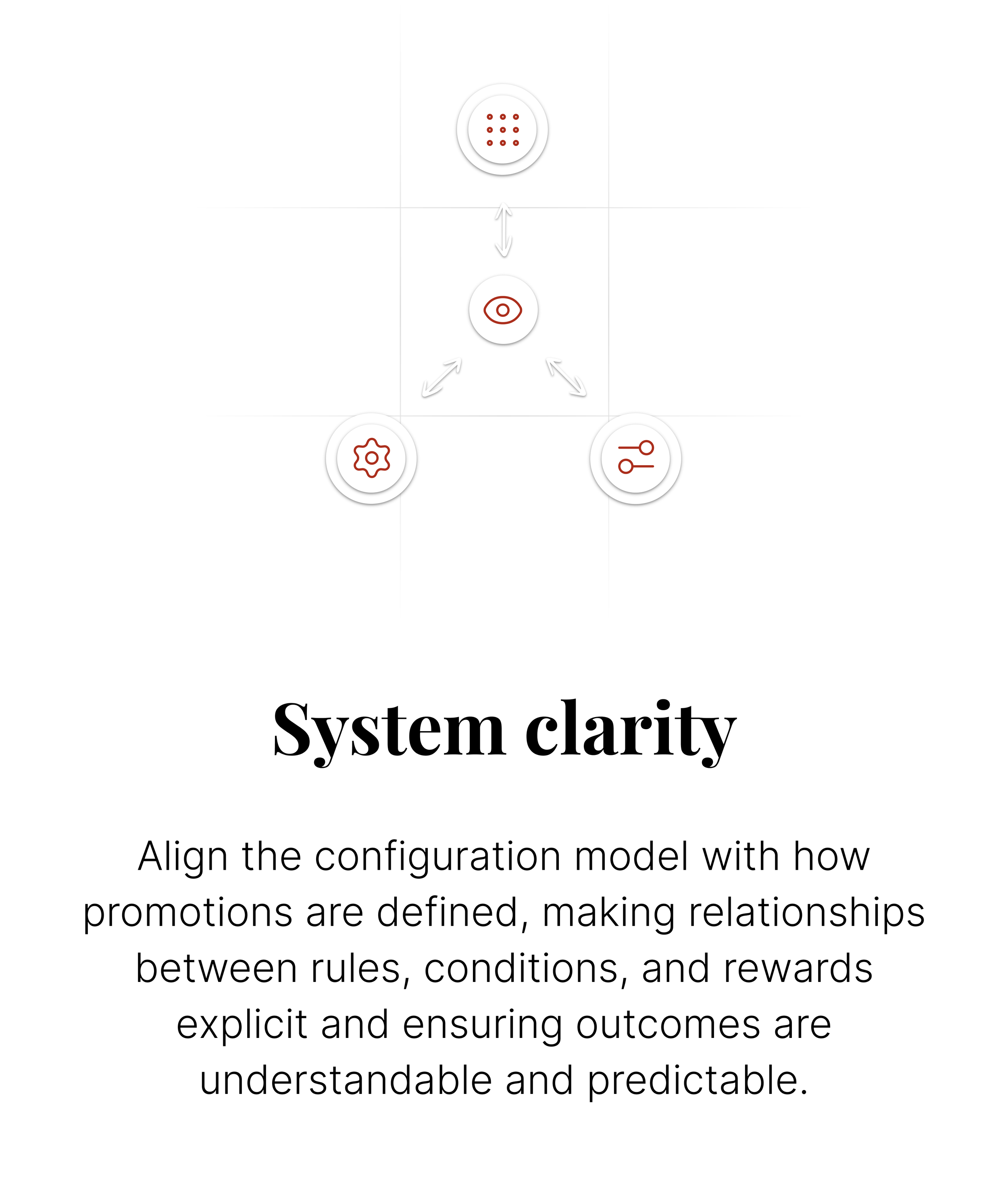
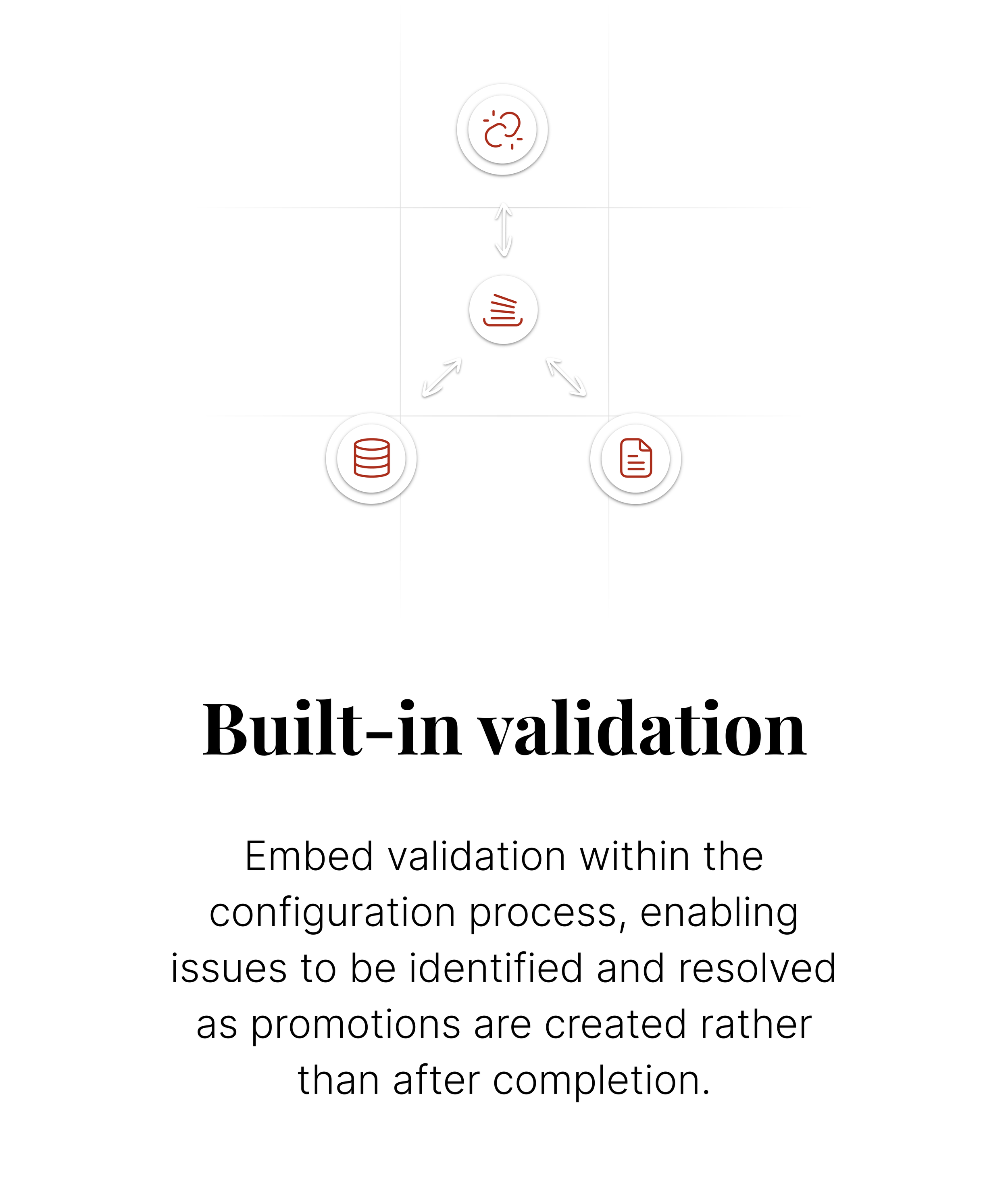
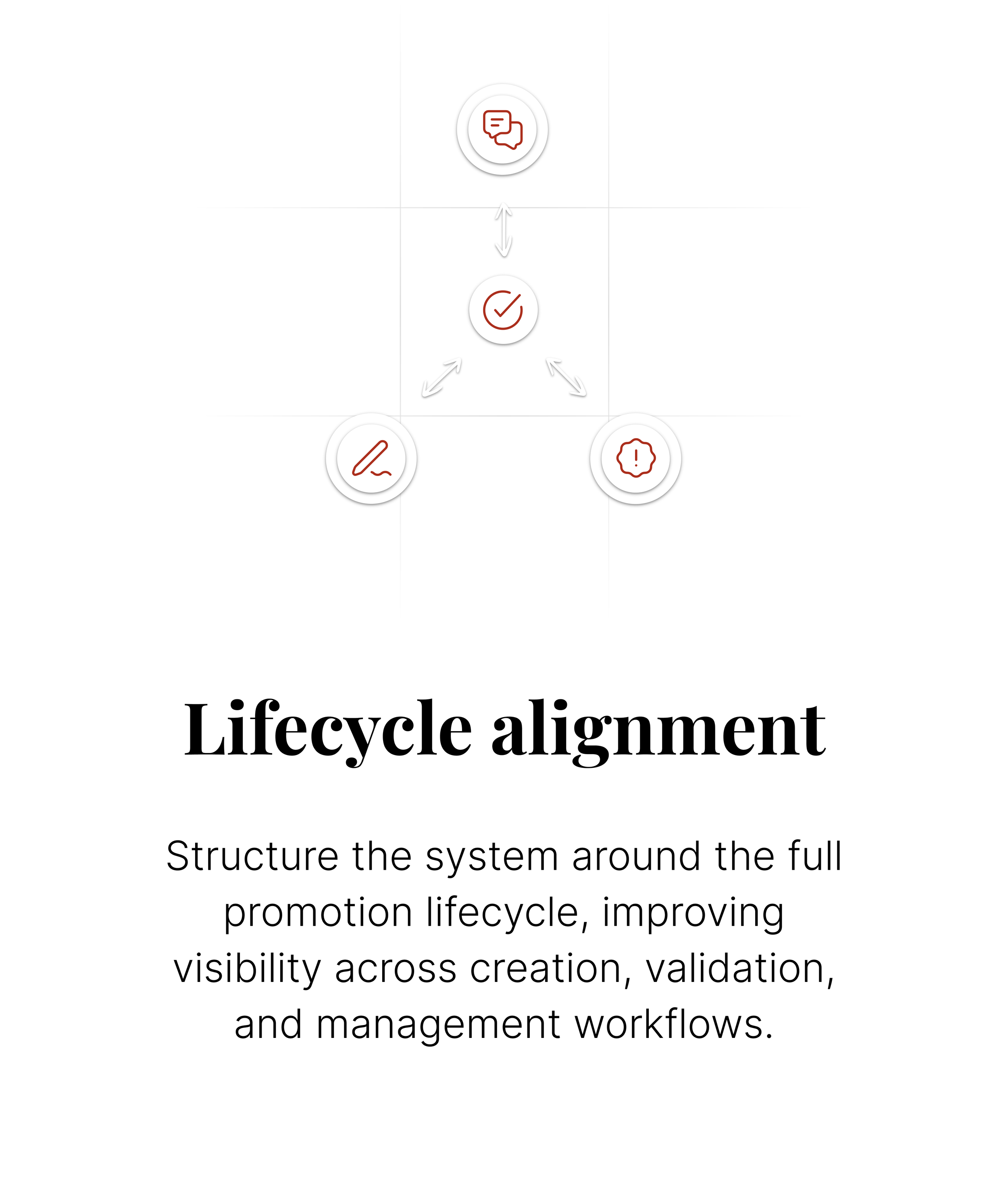
I created three key design principles to guide my design process:
Solution
Discovery showed that promotion configuration was difficult to understand because rule dependencies were hidden, configuration decisions were scattered across a large form and validation relied heavily on manual QA.
The redesign focused on making system behaviour visible while guiding users through a structured configuration workflow.
Solution flow

This flow was designed to make the rules engine transparent and guide users through safe and effective promotion setup.
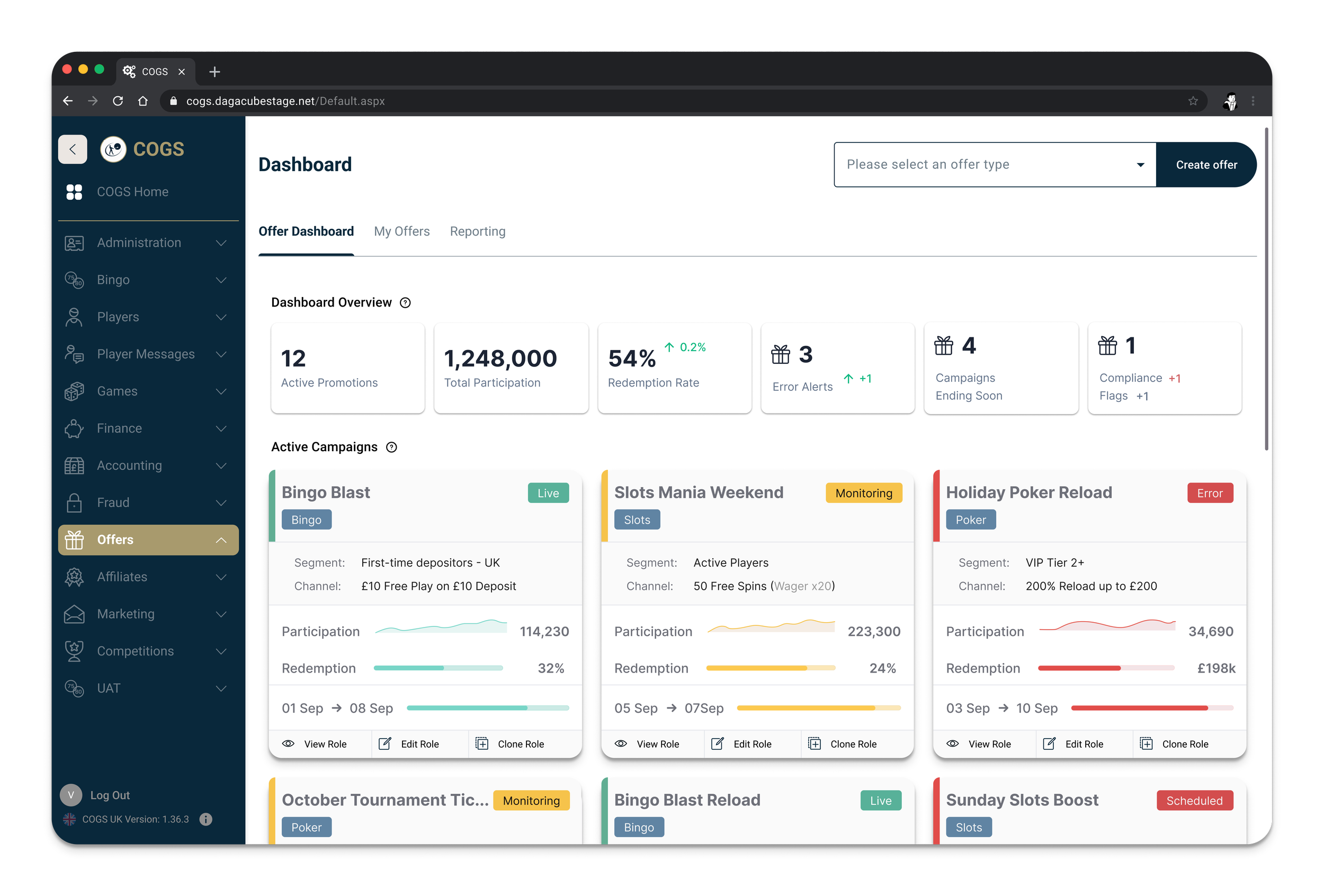
Campaign overview.
Promotion management begins in the operational dashboard, where teams can view active and scheduled campaigns.
A card-based layout surfaces key campaign details such as reward type, status and activation windows, making promotions easier to scan.
Campaign cards dashboard
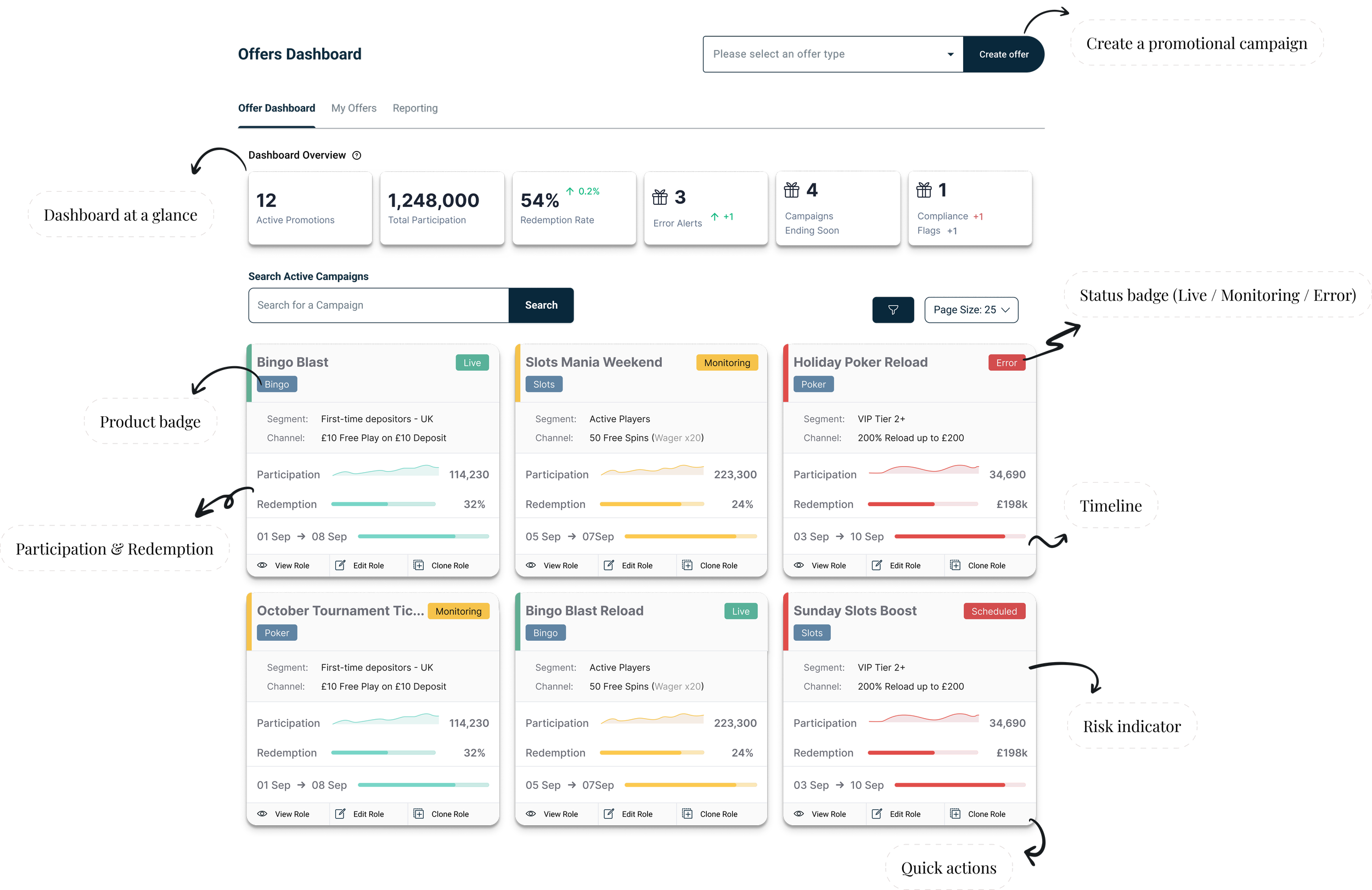
The interface was designed to support rapid scanning rather than deep data inspection.
Dashboard layout direction.
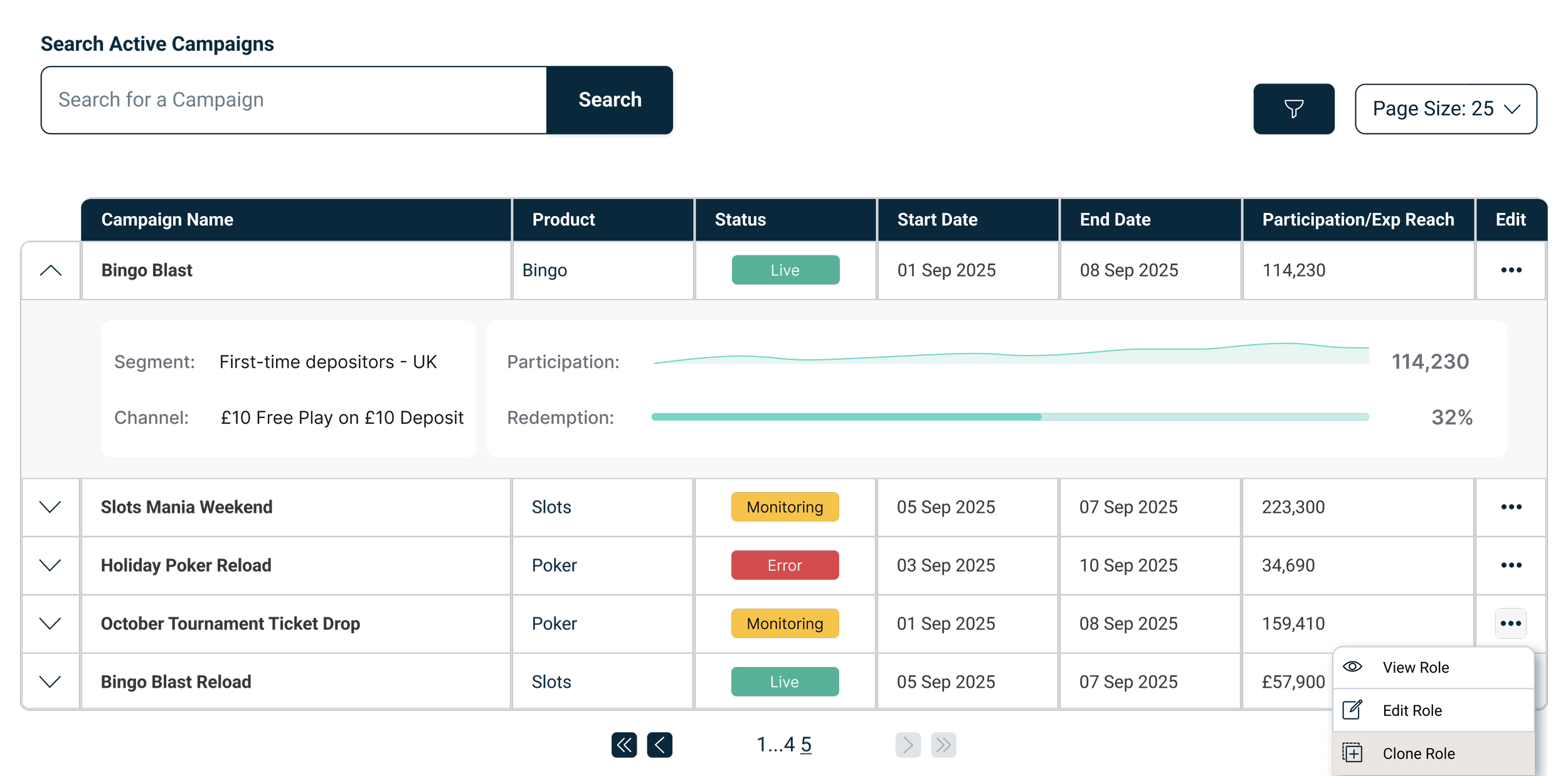
During exploration, both card and list layouts were considered. Cards provided clearer visual hierarchy, while a list view offered a more compact table format for managing large numbers of campaigns.
The card layout became the primary experience, with a list view toggle planned for future iterations.
Card layout direction + list view
Explicit rules & dependencies.
Discovery revealed that many dependencies between configuration fields were hidden, making promotion behaviour difficult to predict.
To address this, validation behaviour was mapped using a validation logic matrix, defining how the system should respond to rule conflicts, missing dependencies, and risky configurations.
Validation logic matrix
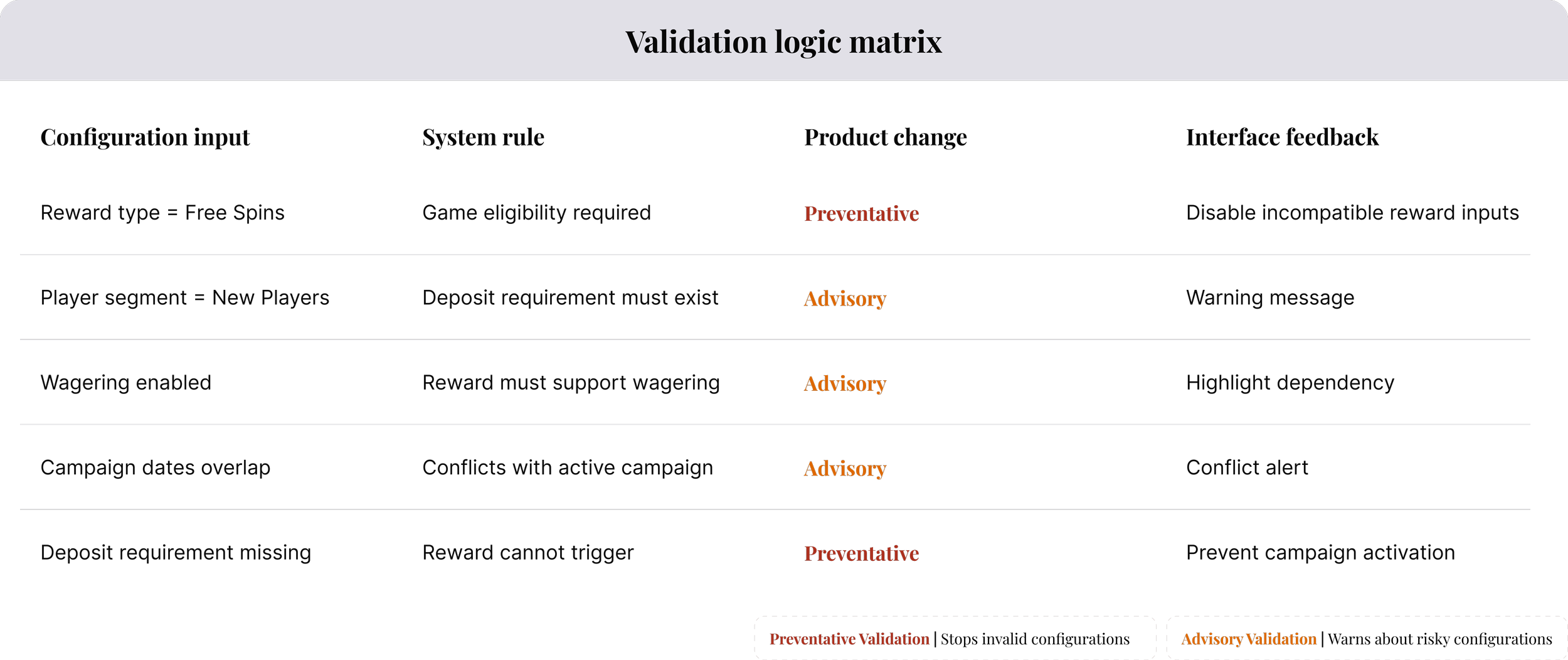
This framework allowed the interface to provide inline system feedback, guiding teams during promotion setup.
Configuring promotion rules.
Promotion setup was redesigned as a structured configuration flow.
Instead of a single dense form, the new experience guides teams through the key stages of promotion setup such as eligibility conditions, deposit requirements, reward configuration, and wagering rules.
Configuration stepper
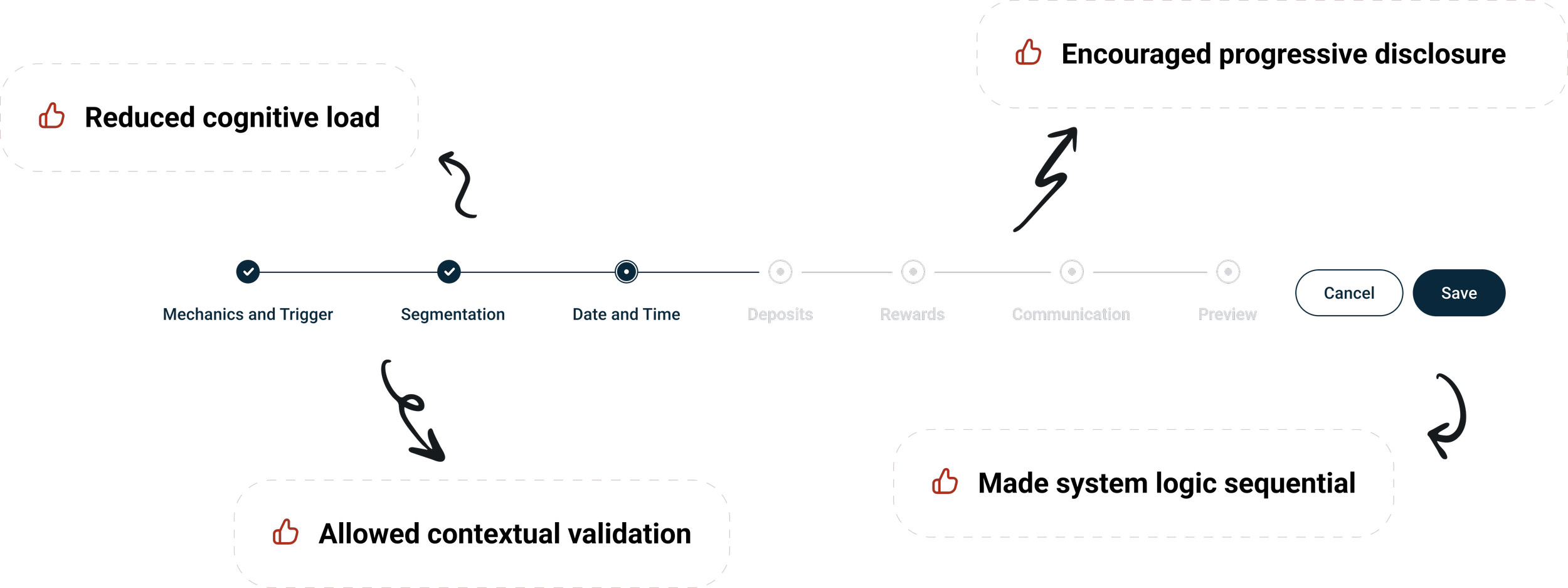
This structure reduces cognitive load by allowing teams to focus on one decision at a time.
Dynamic reward configuration.
The rewards section adapts dynamically based on inputs defined earlier in the configuration process.
Selections such as reward type, eligibility rules, and deposit conditions automatically adjust the available reward parameters.
Dynamic reward configuration
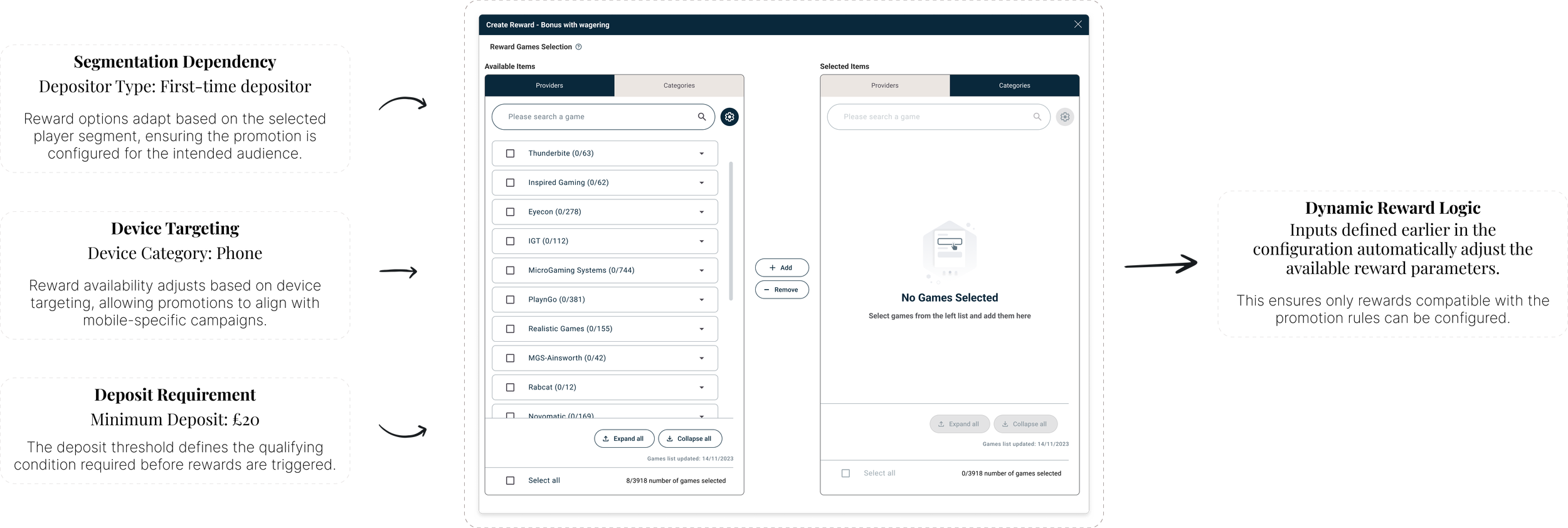
Inline rule logic
Earlier configuration decisions automatically shape the reward setup, reducing invalid configurations and making rule dependencies visible.
Preventative safeguards & configuration errors.
The interface disables incompatible options and hides fields that are not relevant to the selected promotion type.
Disabled inputs / hidden fields
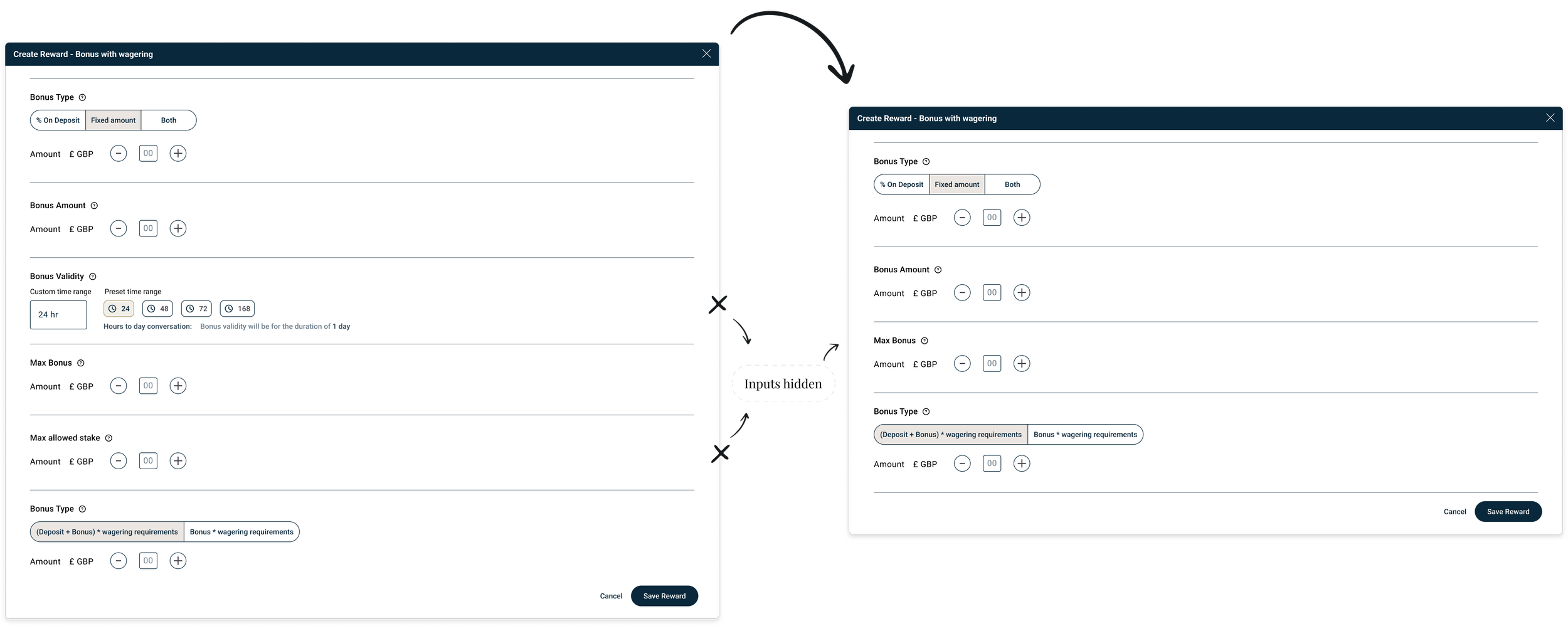
This prevents rule conflicts before they occur.
Advisory feedback.
Where configurations may introduce risk.
The system provides warning messages highlighting potential issues without blocking progress.
Warning examples
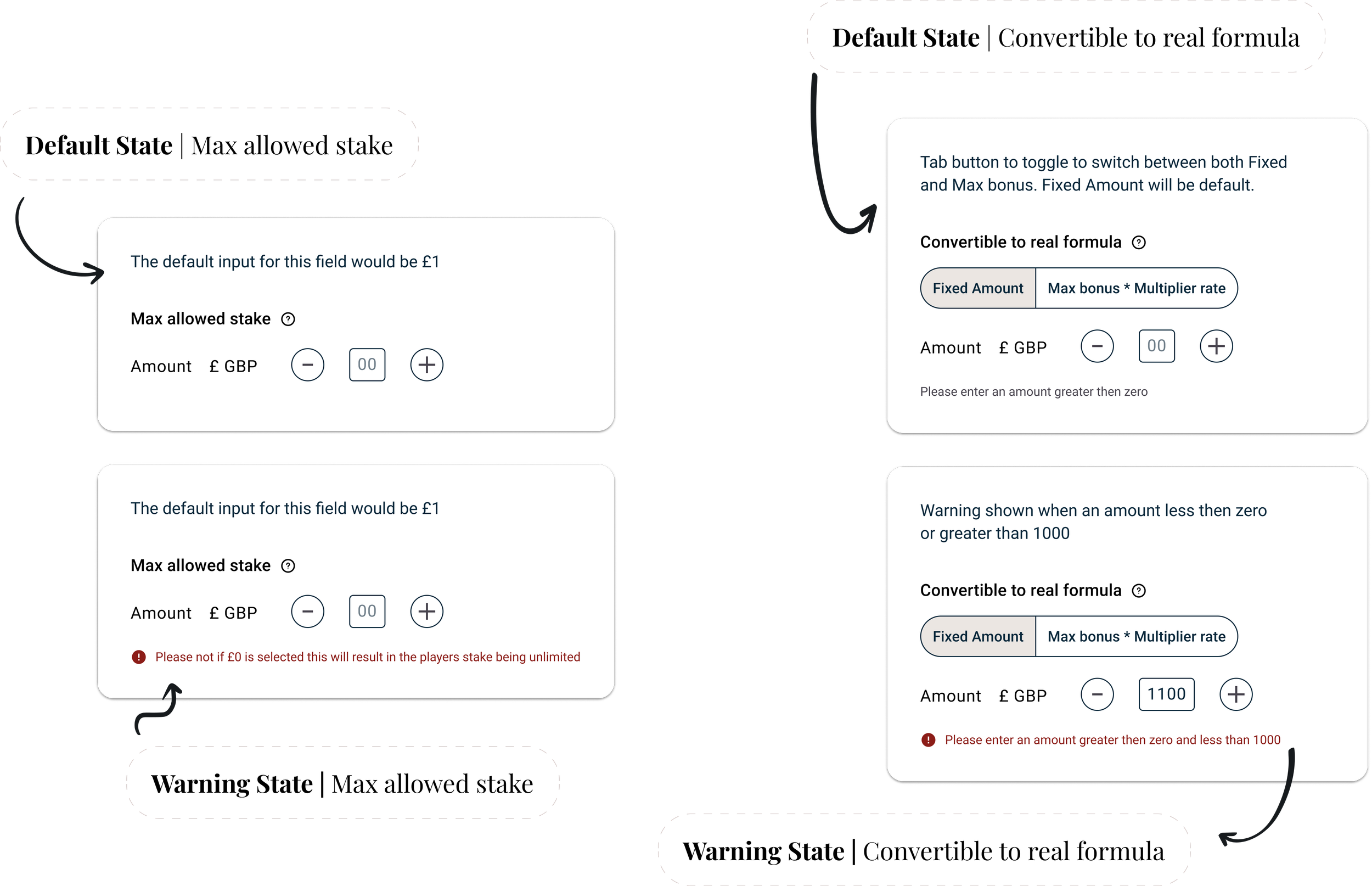
This allows teams to understand rule conflicts while maintaining flexibility.
Confident validation.
Before activating a campaign.
Teams review the full promotion configuration in a structured confirmation layer.
Review screen
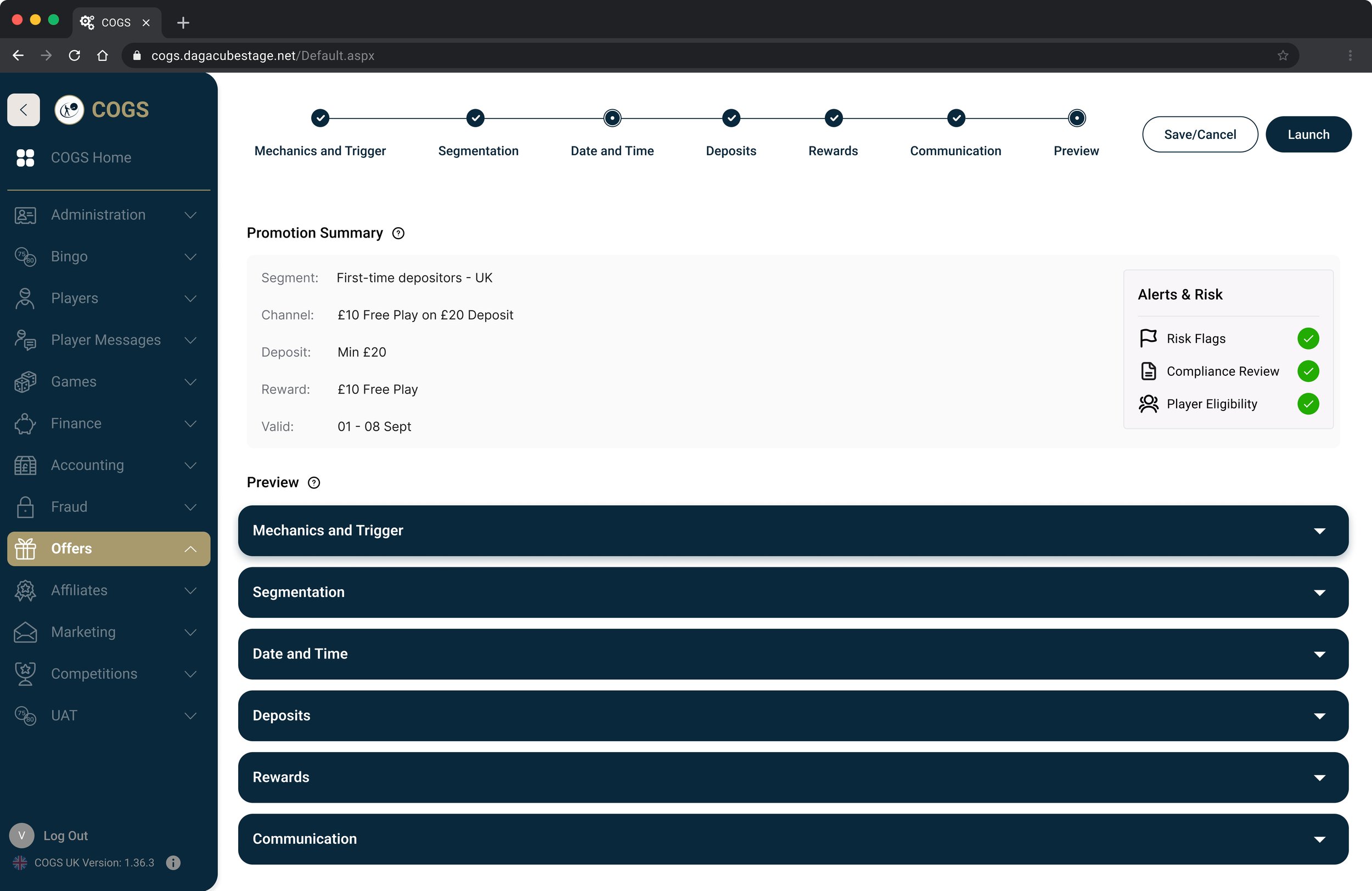
The validation screen displays key promotion details including eligibility rules, reward structure, deposit conditions, wagering requirements, and campaign timing.
This final step allows teams to verify that the promotion behaves as expected before launch.
Impact
The redesigned configuration experience improved both usability and operational efficiency across the teams responsible for managing promotions.
Improvements were measured against the success metrics defined during the discovery workshop.
Usability.
Improving clarity and reducing cognitive load during promotion setup was a key objective of the redesign.
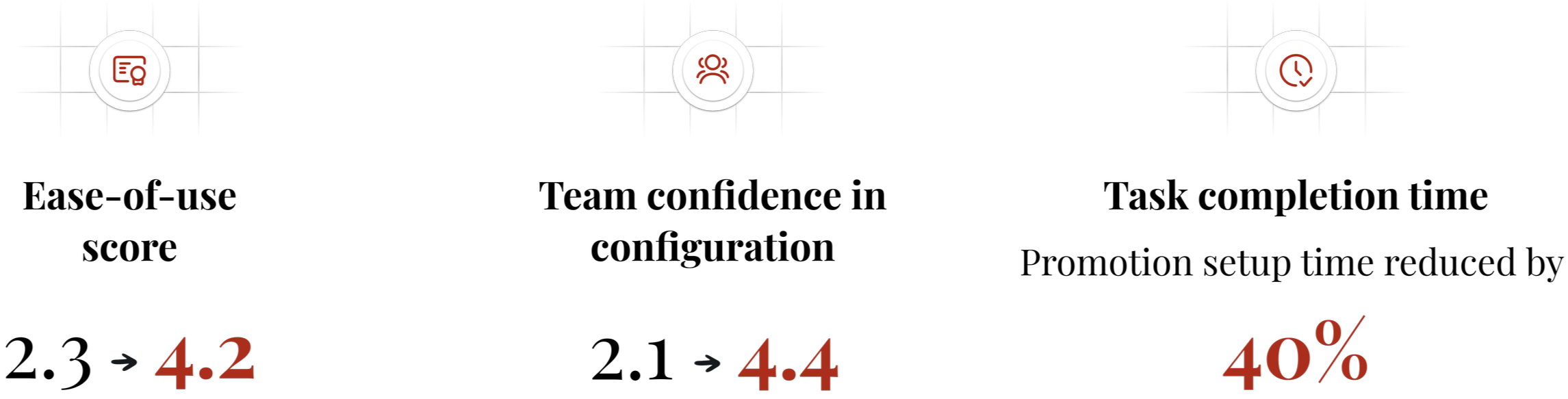
These improvements reflected the impact of the structured configuration flow, clearer rule dependencies, and dynamic configuration behaviour.
Operational efficiency.
The redesign also reduced the operational overhead required to create and manage promotions.
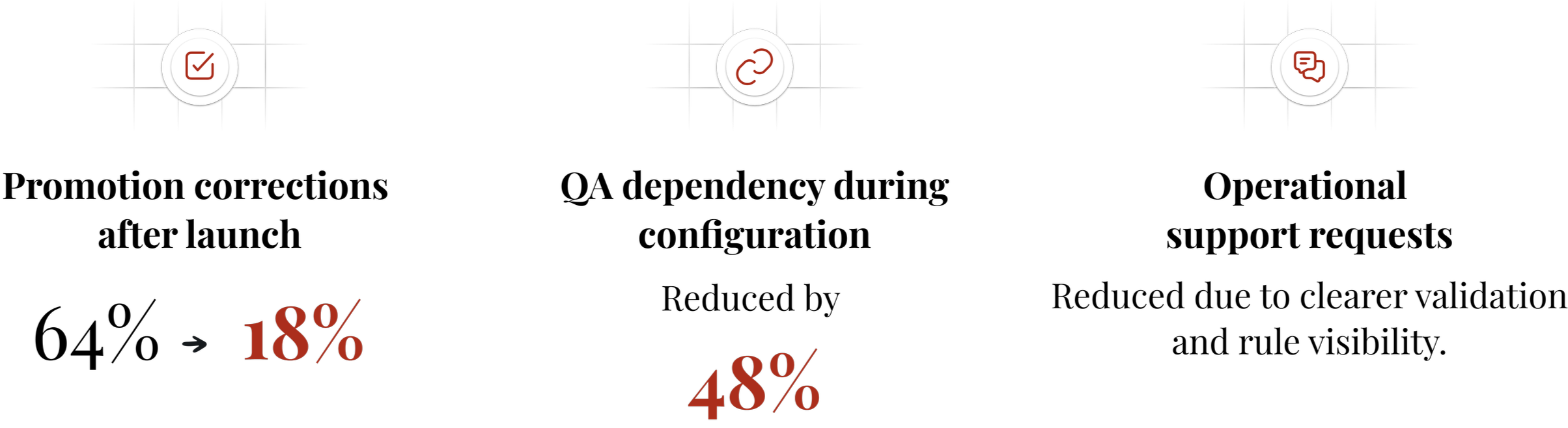
By preventing configuration errors earlier in the workflow, teams were able to launch campaigns with greater confidence and fewer manual interventions.
Governance & risk.
Because promotions control financial incentives, improving governance and reducing configuration risk was critical.

The introduction of validation logic and confirmation layers helped ensure that promotions were configured correctly before going live.
Key outcome.
By making promotion logic visible and guiding teams through a structured configuration workflow, the redesign transformed promotion setup from a complex, error-prone process into a predictable system teams could confidently operate.
Grosvenor casino
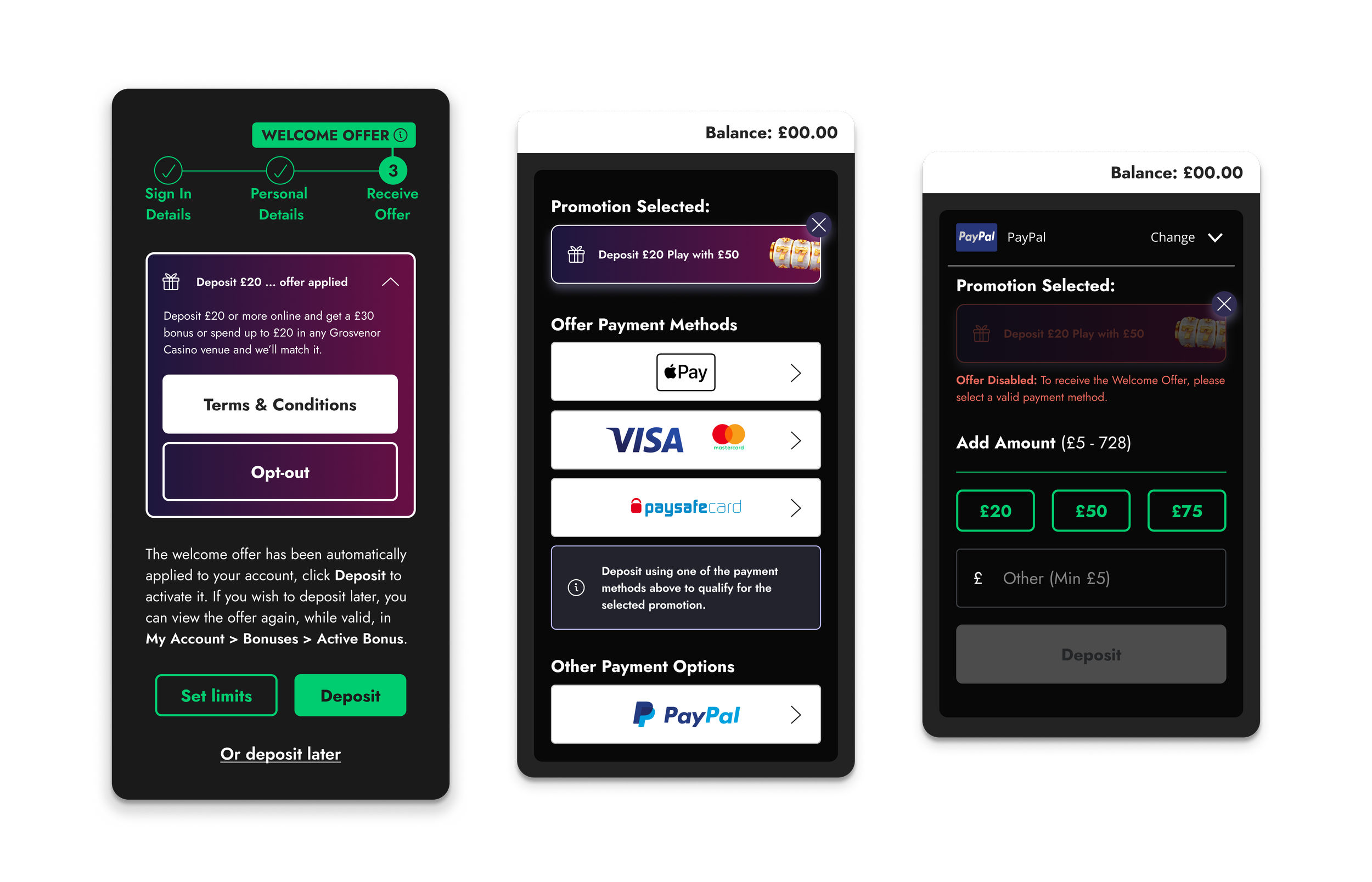
Redesigning the first deposit experience to increase confidence
and conversion
Improving clarity at the moment of commitment led to measurable gains in completion, reduced confusion and lower support demand across the journey.
-40%
Reduced time in task
+83%
Ease of use score
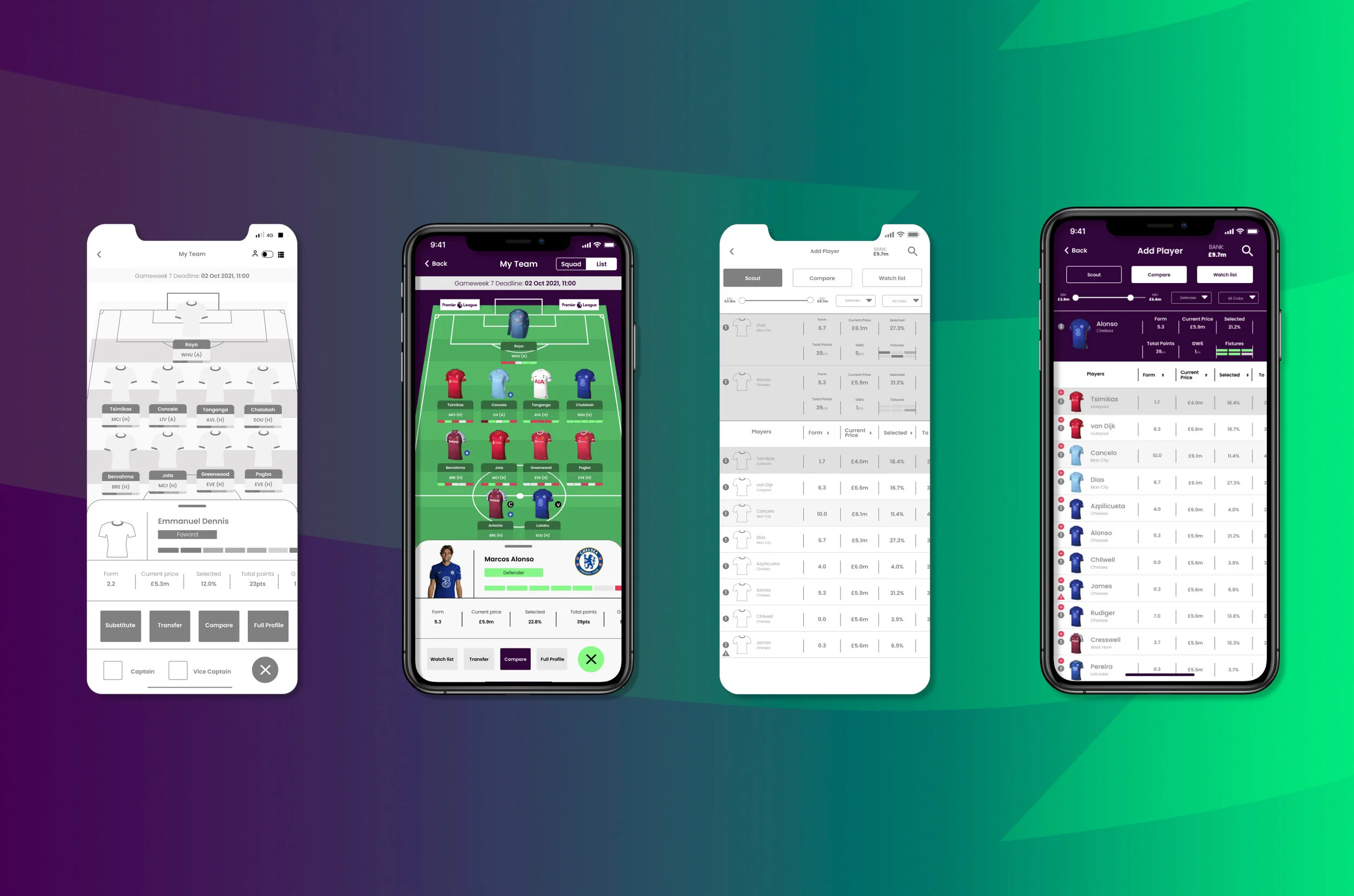
Fantasy football app
Player Management System
Reducing friction and decision fatigue in high-frequency player management tasks